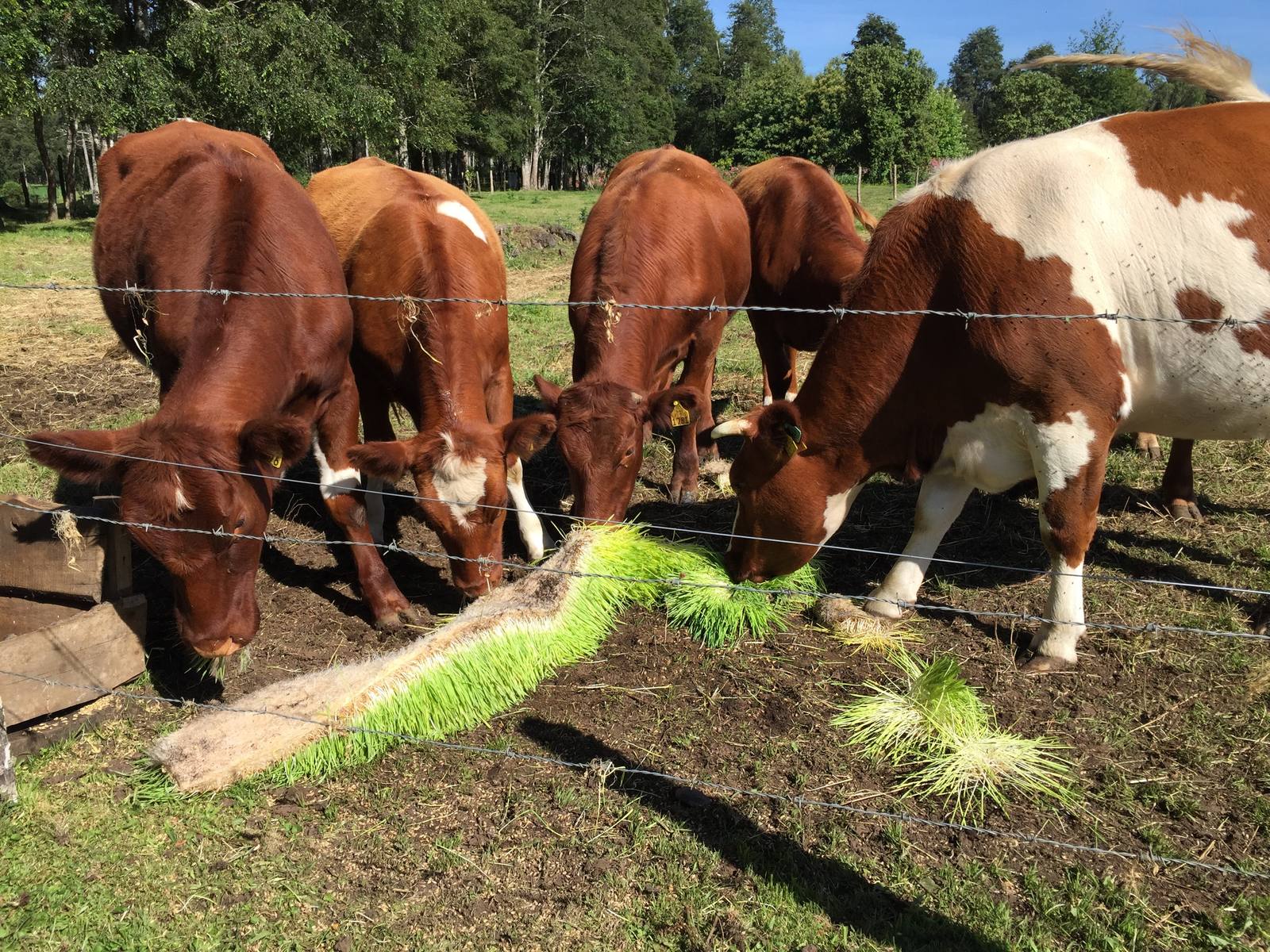
For livestock producers, maintaining a consistent and reliable feed supply is essential to managing a healthy, productive operation. But changing weather patterns, rising feed costs and unpredictable forage availability can make traditional feeding programs increasingly difficult to manage.
Hydroponic fodder offers another option.
By growing fresh forage in a controlled environment, producers can supplement their existing feed supply with a consistent source of fresh green feed. However, introducing a new feed source requires more than simply adding it to the daily ration.
Understanding how hydroponic fodder fits into an animal’s nutritional requirements is an important part of making the transition successful.
Whether you manage a cattle operation, dairy herd or other livestock enterprise, incorporating hydroponic fodder should begin with a clear understanding of your current feeding program.
Here’s how to approach the process.
1. Evaluate your existing feeding program
Before introducing hydroponic fodder, take a closer look at what your livestock are currently eating.
A balanced feeding program accounts for an animal’s nutritional requirements, including energy, protein, fiber, vitamins and minerals. These requirements vary depending on species, age, body weight, production stage and overall health.
Start by evaluating:
- Current forage sources: What types of hay, pasture, silage or other roughage make up the existing diet?
- Nutritional composition: What are the current levels of protein, energy, fiber and other essential nutrients?
- Daily feed intake: How much feed is each animal consuming?
- Feed availability: Are seasonal changes, drought or supply disruptions affecting your current forage supply?
- Production goals: Are you feeding breeding animals, growing cattle, finishing livestock or lactating dairy cows?
Understanding these factors helps identify where hydroponic fodder may fit into the existing ration.
It also establishes a baseline for measuring changes in feed intake, animal condition and overall performance after introducing a new feed source.
2. Understand the nutritional role of hydroponic fodder
Hydroponic fodder is produced by germinating cereal grains, such as barley, under controlled growing conditions. Over several days, the seeds develop into a mat of roots, shoots and green plant material that can be harvested and fed fresh. (For the basics, see What Is Fodder? A Plain-English Guide.)
The resulting fodder provides a source of fresh forage that can complement conventional feed ingredients.
However, one important consideration is moisture content.
Fresh hydroponic fodder contains a significant amount of water. Although the harvested material may appear substantial by weight, its dry matter content is considerably lower than that of traditional dry hay.
This distinction matters because livestock consume nutrients based on the dry matter they obtain, not simply the total weight of feed offered.
For example, two feed sources may each weigh 10 pounds, but they can provide very different amounts of actual nutrients depending on their moisture content.
Research published in 2025 examining 28 studies on hydroponic forage in ruminant nutrition identified high moisture content and relatively low dry matter yield as important considerations when evaluating its nutritional contribution (Vastolo and Cutrignelli, 2025).
That review put the average dry matter of hydroponic barley sprouts at 10.5% across the 21 studies that reported it (Vastolo and Cutrignelli, 2025). At that level, 10 pounds of fresh fodder supplies about 1 pound of dry matter. The same 10 pounds of hay at 88% dry matter, the figure Nebraska Extension uses in its intake examples, supplies about 8.8 pounds (Nebraska Extension, 2024).
For producers, this means hydroponic fodder should be evaluated as part of the complete ration rather than treated as a direct pound-for-pound replacement for conventional forage.
Understanding its nutritional contribution is the first step toward using it effectively.
Livestock draw their nutrition from dry matter, not fresh weight. Ten pounds of fodder and ten pounds of hay are not the same feed.
3. Determine where hydroponic fodder fits into the ration
Once you understand your existing feeding program and the nutritional characteristics of hydroponic fodder, the next step is determining how to incorporate it.
For many operations, hydroponic fodder can serve as a supplemental green feed alongside existing forage and other ration components.
Depending on the livestock and production goals, it may be used to:
- Supplement conventional hay or forage.
- Provide a consistent source of fresh green feed.
- Diversify available feed sources.
- Help supplement forage availability during seasonal shortages.
- Support a more flexible feeding strategy when traditional forage supplies become limited.
The appropriate inclusion level will depend on the animal’s nutritional requirements and the composition of the existing diet.
There is no universal feeding rate that works for every operation. Cattle, dairy cows, sheep, goats and other livestock have different nutritional requirements, and even animals within the same species may require different feeding strategies.
The research points the same way. In the 2025 review, moderate inclusion of 5–25% of dietary dry matter improved intake, digestibility and growth in small ruminants and growing animals, while excessive replacement reduced feed intake or digestibility (Vastolo and Cutrignelli, 2025).
Working with a qualified livestock nutritionist can help determine how much hydroponic fodder to introduce while maintaining an appropriately balanced ration.
4. Introduce hydroponic fodder gradually
As with any new feed source, introducing hydroponic fodder gradually gives livestock time to adjust to changes in their diet.
Sudden changes in feed composition or intake can disrupt normal digestive processes, particularly in ruminants such as cattle, sheep and goats.
Instead of replacing a significant portion of the existing ration immediately, begin by offering a small amount of hydroponic fodder alongside familiar feed sources.
From there, gradually adjust the amount based on feed acceptance, intake and guidance from your nutrition professional.
During the transition, consider the following:
- Maintain consistent feeding schedules.
- Introduce small amounts before increasing the quantity offered.
- Continue providing appropriate sources of effective fiber and roughage.
- Monitor feed consumption and changes in appetite.
- Avoid making several major dietary changes simultaneously.
Penn State Extension’s guidance on transitioning calves to feedlot diets emphasizes the importance of gradual dietary changes and monitoring intake throughout the adjustment period. Because the rumen takes time to adjust, it moves calves from pasture to grain over about 21 days, in three seven-day steps, with intake checked daily (Penn State Extension, 2025).
While the specific transition schedule for hydroponic fodder will differ, the underlying principle remains the same: give livestock time to adapt to new feed ingredients.
5. Monitor feed intake and animal response
Once hydroponic fodder becomes part of the feeding program, monitoring livestock is essential.
A new feed source may be readily accepted by some animals, while others may take longer to adjust. Producers should pay attention to how livestock respond as the amount of hydroponic fodder increases.
Some important factors to monitor include:
- Feed acceptance: Are animals readily consuming the new feed? Are they leaving more feed behind than usual?
- Overall intake: Has total feed consumption changed since introducing hydroponic fodder?
- Body condition: Are animals maintaining appropriate body condition for their production stage?
- Digestive response: Are there noticeable changes in manure consistency, rumination or other indicators of digestive health?
- Production performance: For dairy operations, monitor milk production and composition. For growing or finishing cattle, track weight gain and feed efficiency where applicable.
Keeping records during the transition can help producers identify patterns and determine whether adjustments to the ration are necessary.
If animals experience a noticeable decline in appetite, digestive disturbances or unexpected changes in condition, consult a veterinarian or livestock nutritionist before continuing to increase the new feed source.
A new feed earns its place in the ration one step at a time, measured against where the herd started.
6. Maintain feed quality and consistency
Introducing hydroponic fodder also means establishing a consistent production and feeding routine.
Because hydroponic fodder is harvested fresh, producers should have a plan for managing daily production, harvesting, storage and distribution.
A few important considerations include:
- Harvest consistency: Maintain a predictable growing and harvesting schedule to support consistent feed availability.
- Clean growing conditions: Keep trays, equipment and growing areas clean to reduce the risk of contamination.
- Feed inspection: Check harvested fodder for unusual odors, discoloration or visible mold before feeding.
- Proper handling: Establish appropriate handling and storage practices to maintain feed quality between harvesting and feeding.
- Consistent availability: Plan production around daily livestock requirements to minimize unnecessary waste.
Feed quality is an important part of any successful feeding program. Consistency in production and handling helps ensure that hydroponic fodder remains a dependable addition to the operation. (We cover the risks in The Hidden Cost of Mold in Hydroponic Fodder Systems.)
7. Evaluate the results and adjust as needed
Introducing hydroponic fodder is not a one-time adjustment. Like any component of a livestock feeding program, its role should be evaluated over time.
Once livestock have adjusted, review the feeding program and compare current results with the baseline established before the transition.
Consider questions such as:
- Has overall feed intake remained consistent?
- Are animals maintaining appropriate body condition?
- Has the availability of supplemental forage improved?
- Are there changes in purchased feed requirements?
- Is the system producing enough fodder to meet the intended feeding goals?
- Does the nutritional and financial contribution justify the production costs?
It is also important to evaluate the economics of hydroponic fodder based on dry matter and nutrient contribution rather than fresh weight alone. (We look at where the resources go in Hydroponic Fodder Doesn’t Eliminate Waste.)
A feeding program should ultimately support the nutritional needs of the livestock while making practical and financial sense for the operation.
Building a more flexible feeding program
For livestock producers, feed management is about more than what animals eat each day. It is also about maintaining reliable access to quality feed while adapting to changing agricultural conditions.
Hydroponic fodder offers an additional way to diversify available forage sources and incorporate fresh green feed into an existing feeding strategy.
When introduced thoughtfully, evaluated as part of a balanced ration and monitored over time, hydroponic fodder can become a useful component of a broader livestock feeding program.
The goal isn’t necessarily to replace everything you’re already feeding. It’s to give producers another tool for managing feed availability, supporting livestock nutrition and building a more adaptable operation.
Looking for another way to support your feeding program?
Explore Eleusis hydroponic fodder systems and discover how controlled-environment forage production can help bring greater flexibility to your operation.
For the research behind fodder’s nutritional value, including the dry-matter math, Eleusis has published Addressing Skepticism About Fodder’s Nutritional Claims, a free research brief. Producers can also contact Eleusis to discuss feed planning for their operation.