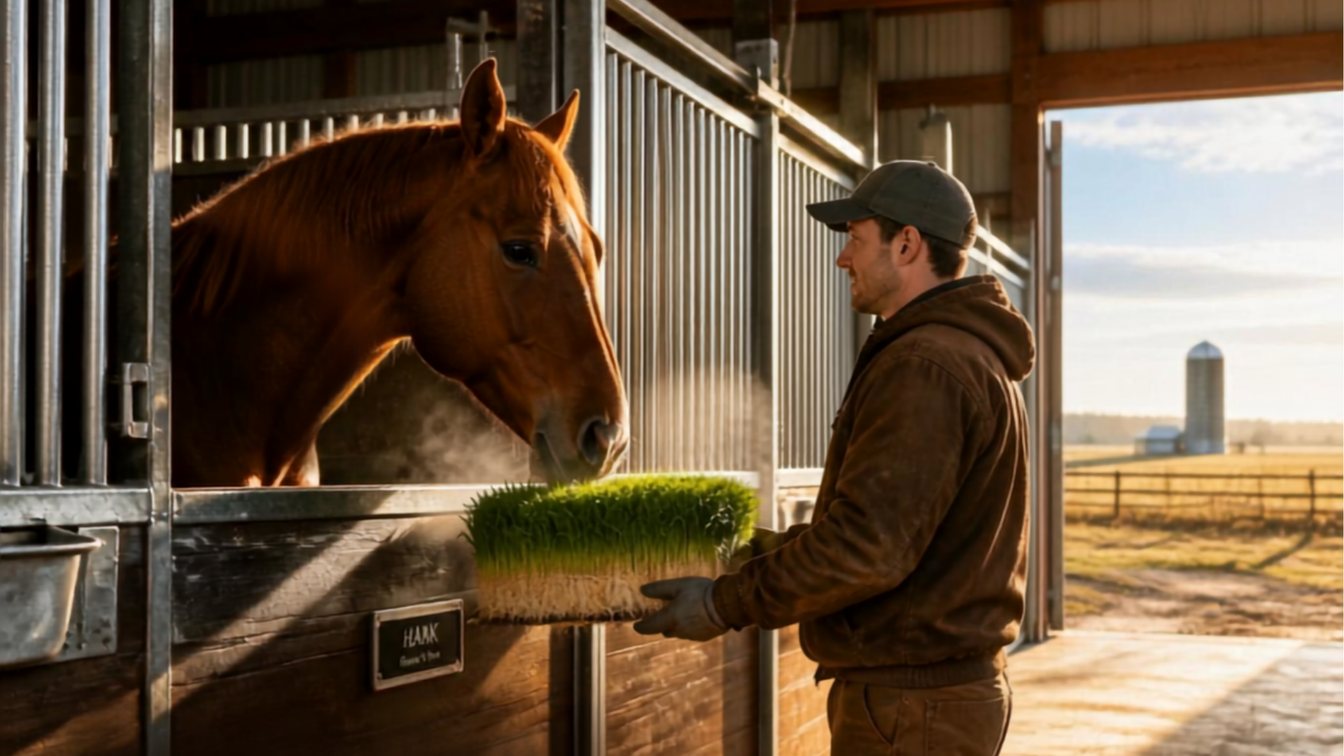
A single contaminated tray can cost a ranch an entire day's feed supply. That is the reality of running a hydroponic fodder system: because Green Sprout is grown and fed on a rolling daily cycle rather than stored in bulk like hay, there is no buffer inventory to fall back on when a batch fails.
Mold is the most recurring operational complaint in the hydroponic fodder industry, and every equipment manufacturer markets against it for good reason.
For an equestrian facility feeding fresh fodder to performance horses, that risk is not abstract. It is the difference between a herd that eats well every single day and one that faces an unplanned gap in nutrition — or worse, exposure to a batch that should never have reached the trough.
Why fodder systems are especially vulnerable to mold
Hydroponic fodder grows fast because the environment is warm, humid, and saturated with moisture, generally between 19 and 24 degrees Celsius (65 to 75 degrees Fahrenheit) with consistent watering. Those are precisely the conditions barley needs to sprout in seven days. They are also precisely the conditions that fungi need to grow.
Fungal spores are frequently already present on grain seed before it ever enters a tray. In a soil-based growing environment, those spores compete against a diverse population of beneficial soil microbes that helps hold them in check. Hydroponic systems do not have that natural buffer. Once a spore takes hold in a warm, wet tray, there is little standing in its way.
This is a structural feature of hydroponic production, not an occasional malfunction. Any operator evaluating a fodder system should assume mold risk is present from day one and ask how the system is designed to manage it, not whether it will ever come up.
What contaminated fodder actually does to a herd
The consequences of feeding moldy fodder go well beyond a wasted tray. Research documents measurable declines in livestock performance linked to moldy sprout, and in documented cases, animal deaths.
The more insidious risk is invisible. Mycotoxins, toxic compounds produced by certain molds, can remain biologically active even after visible mold is removed. More than 300 distinct mycotoxins have been identified in feed systems worldwide (PMC), and research on chronic low-level exposure — the kind more common in practice than a single dramatic event — links it to suppressed immune function, oxidative stress, and impaired reproductive performance over time.
For equestrian operations, the stakes are especially high. Digestive upset linked to spoiled or inconsistent feed is a recognized contributor to colic, one of the leading health emergencies in performance horses. When a single animal represents a significant financial investment, the tolerance for contamination risk is effectively zero.
The five-layer approach to contamination control
No single fix eliminates mold risk in a fodder system. The evidence points to a layered protocol, one that starts before the seed ever touches water and continues every day the system runs.
- Seed quality and pretreatment. Clean, high-quality seed treated with an approved disinfection rinse before soaking closes off the most common entry point for fungal spores.
- Environmental control. Strong airflow, even seed distribution, and avoiding oversaturation keep the growing environment on the drier end of its viable range, where fungi struggle to establish.
- Facility sanitation. Standing water, biofilm, and organic residue in trays, drip lines, and reservoirs create an ongoing contamination reservoir. Scheduled cleaning, not reactive cleaning, is what keeps that reservoir from building.
- System design. Equipment that drains fully and is easy to sanitize is inherently easier to keep clean than equipment where water pools or components are hard to reach.
- Daily monitoring. Visual inspection catches early signs of mold before spores spread from an isolated tray to an entire production run.
Operators who treat contamination control as a checklist completed once, rather than a discipline practiced every day, are the ones most likely to lose a batch.
What to ask before you install a fodder system
The practical takeaway for any rancher or equestrian facility manager evaluating a hydroponic fodder system is this: do not ask whether a system can produce fodder under ideal conditions. Ask what specific sanitation, drainage, and monitoring protocol is built into daily operation, and whether that protocol can be executed by ranch staff rather than requiring specialist intervention.
A system engineered around easy drainage, visible fault indicators, and straightforward sanitation gives the people actually running it, day in and day out, the tools to catch a problem before it becomes a lost batch.
For a full review of the research behind these findings, including citations from peer-reviewed studies on mycotoxin exposure and hydroponic biofilm persistence, see our whitepaper, Mold and Contamination Control in Hydroponic Fodder: What the Evidence Shows.
Eleusis has spent four decades engineering fodder systems around this exact reality: robust, low-maintenance hardware, visible fault indicators, and sanitation protocols that ranch and barn staff can execute without specialist support. If you are evaluating a fodder system for your operation, or want a second look at how contamination is being managed in your current setup, contact the Eleusis team to discuss what a properly engineered installation looks like for your herd.