Regenerative agriculture is changing how producers think about the future of farming and livestock production. Rather than focusing solely on maximizing output, regenerative approaches emphasize soil health, biodiversity, water management and the long-term resilience of working land.
But transitioning toward regenerative practices presents real challenges. Producers still need to feed their animals, manage operating costs and maintain reliable production while adapting to changing weather, water availability and forage conditions.
This is where hydroponic fodder may have a role.
By growing fresh green feed in a controlled, soil-free environment, hydroponic systems offer another way to approach feed production. They do not replace healthy soil, pasture management or regenerative grazing. Instead, they may serve as a bridge between today’s feeding challenges and a more resource-conscious agricultural future.
The opportunity is not to replace regenerative agriculture with technology. It is to use technology thoughtfully in support of a more resilient farming system.
What does regenerative agriculture actually mean?
Regenerative agriculture is an approach to managing agricultural land that prioritizes the long-term health and function of the ecosystem. Although definitions and practices vary by operation, the approach commonly emphasizes several interconnected principles, closely matching the soil health principles set out by the USDA Natural Resources Conservation Service (USDA NRCS):
- Minimizing soil disturbance: Reducing unnecessary tillage and other practices that disrupt soil structure and biological activity.
- Maintaining soil cover: Protecting the soil surface with growing plants or crop residue to help limit erosion and support water retention.
- Increasing biodiversity: Diversifying plant communities and crop rotations to support a wider range of ecological functions.
- Maintaining living roots: Keeping roots in the soil for longer periods to support soil organisms and nutrient cycling.
- Integrating livestock thoughtfully: Using well-managed grazing and livestock integration to support nutrient cycling and land productivity.
These principles work together. Healthy soil can improve water infiltration, help retain moisture and support productive plant growth. Diverse plant communities and appropriate grazing management can contribute to the resilience of pastures and rangelands (USDA NRCS).
For livestock producers, regenerative agriculture is not simply about adopting a single new practice. It is about managing the relationships between land, water, plants, animals and the economics of the operation.
That means every feed-production decision deserves consideration within the broader system.
The feed challenge behind regenerative farming
Livestock production depends on a reliable supply of nutritious feed. For grazing operations, that often means maintaining healthy pastures and rangelands while accounting for seasonal changes in forage availability.
Drought, inconsistent rainfall, degraded pasture, rising input costs and competition for water can make that responsibility increasingly difficult.
When forage becomes scarce, producers may need to purchase additional hay or other feeds, transport supplies over longer distances, or adjust stocking and grazing plans. These decisions can create financial pressure and complicate efforts to manage land for long-term health.
Regenerative grazing can help producers improve how livestock interact with the land, but pasture recovery takes time. Soil health cannot be rebuilt overnight, and grasslands need appropriate management to maintain plant cover and allow vegetation to recover.
Producers still need to feed their animals during that process.
A more resilient feeding strategy may therefore require more than one tool. Pasture management, forage planning, crop diversification and supplemental feed options can each have a role, depending on the operation. Hydroponic fodder offers one possible addition to that toolbox.
Where hydroponic fodder fits
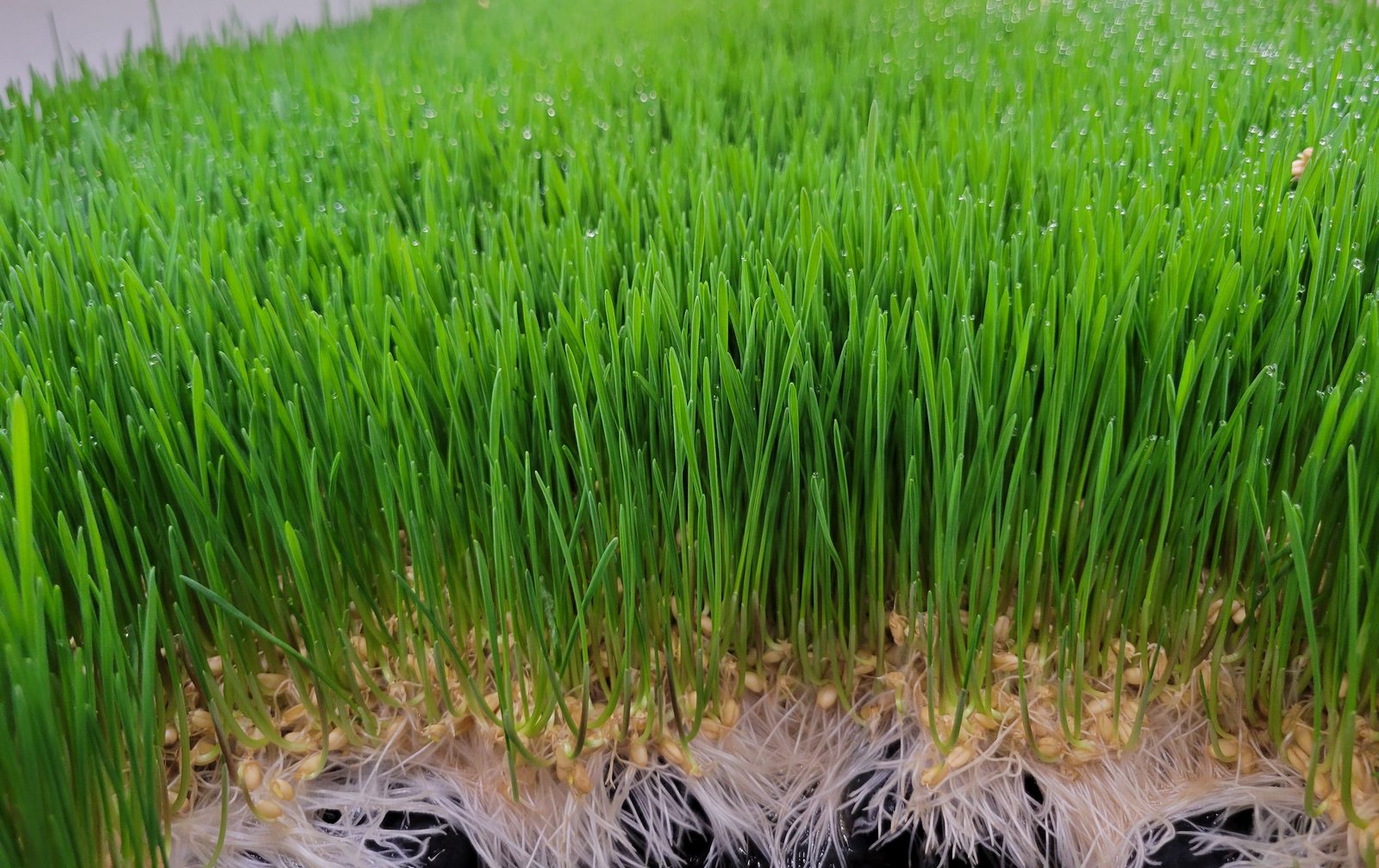
Hydroponic fodder is produced by germinating grains, such as barley or wheat, in a controlled environment without growing them in soil. Within several days, the seeds develop into a mat of shoots and roots that can be harvested as fresh feed. (For the basics, see What Is Fodder? A Plain-English Guide.)
Because production takes place in a compact growing system, it can provide green fodder without requiring a conventional field to grow the crop during that production cycle. That distinction may be useful for operations facing limited land, water constraints or inconsistent access to fresh forage. The UN Food and Agriculture Organization has documented hydroponic green fodder as one such alternative feed source for livestock producers (FAO, 2016).
A 2025 systematic review published in Animals examined 28 studies on hydroponic forage in ruminant nutrition. The review found that hydroponic forage can serve as a complementary feed in some circumstances, but also identified limitations related to high moisture content, lower dry-matter yield and production costs (Vastolo and Cutrignelli, 2025). The findings reinforce the importance of evaluating hydroponic fodder as part of a balanced ration rather than as a universal substitute for conventional feed.
For regenerative producers, the potential role is practical: hydroponic fodder may provide another source of fresh feed while pasture and other forage resources remain central to the feeding strategy. Its value will depend on how it fits the operation’s nutritional requirements, costs and resource constraints.
Supporting a more resilient use of resources
Regenerative agriculture encourages producers to consider how resources move through an entire operation. Hydroponic fodder can contribute to that conversation, but its benefits need to be evaluated carefully.
Water management
Controlled-environment growing systems can deliver water directly to developing plants and may allow water to be reused, depending on system design. A 2026 systematic review of 92 studies reported water savings of 90 to 98% compared with conventional fodder cultivation (Ebenezer and Gnanaraj, 2026).
This can be attractive in areas where water availability limits conventional forage production. However, water-use comparisons need to account for the moisture content of the harvested fodder, the energy required to operate the system and the conventional feed being replaced.
Producing a kilogram of fresh fodder is not the same as producing a kilogram of dry matter. A meaningful comparison considers how much usable nutrition the system delivers relative to the resources consumed.
For producers, the goal is not simply to use less water in one part of the operation. It is to understand whether the overall feeding strategy makes better use of limited water resources.
Land-use flexibility
Hydroponic fodder production does not require field soil for the growing stage, which can offer flexibility where suitable land is limited.
This does not automatically mean that a hydroponic system reduces the total land footprint of feed production. The grain used as seed still has to be produced, and its cultivation requires land and other agricultural inputs.
However, producing supplemental green feed in a compact space may give some operations additional flexibility in how they manage their land and forage supplies. The key question is whether that flexibility provides a practical advantage for the specific operation.
Feed planning and availability
A controlled growing environment can help producers plan for a more predictable supply of fresh fodder, provided the system has reliable seed supplies, water, power and appropriate growing conditions. That predictability may be valuable when outdoor forage production is affected by seasonal conditions.
Hydroponic fodder is not immune to operational risks, and it cannot guarantee feed security on its own. Equipment problems, seed quality, energy costs and sanitation all matter.
Still, an additional feed option may help some producers diversify their feeding plans rather than relying on a single source of forage.
Technology should complement the land, not replace it
One of the most important distinctions in this discussion is that hydroponic fodder production is not inherently regenerative.
Regenerative agriculture is concerned with the function and health of agricultural ecosystems. Growing fodder without soil does not directly improve soil structure, increase pasture biodiversity or restore degraded rangeland. Those outcomes depend on how land is managed.
The connection becomes clearer when hydroponic fodder is considered alongside regenerative practices rather than in isolation.
For example, a producer may use rotational grazing to give pastures time to recover, maintain ground cover to protect soil, and diversify forage species to support more resilient plant communities. Supplemental hydroponic fodder could be evaluated as one part of the feeding plan during periods when pasture availability is limited.
Whether this approach provides a meaningful benefit depends on the details. Does it help the producer manage a seasonal feed gap? Does it reduce the need to purchase a particular feed? Does it support an appropriate ration without creating excessive energy or operating costs?
These are the questions that connect technology to practical land stewardship. A growing system should be evaluated by what it contributes to the operation as a whole, not simply by how much green biomass it produces.
Regenerative agriculture is about improving the health of the whole system. New feed technologies have a role when they support that goal rather than distract from it.
Livestock remain part of the regenerative equation
Livestock are sometimes discussed primarily in terms of the resources they consume. But when managed appropriately, animals can also contribute to nutrient cycling and the management of agricultural landscapes.
The U.S. Department of Agriculture’s Natural Resources Conservation Service lists integrating livestock as one of five soil health principles in its producer guidance, noting that it helps with nutrient cycling (USDA NRCS). Well-planned grazing can help recycle nutrients, manage plant growth and integrate crop and livestock production.
The results depend on management. Grazing pressure, timing, stocking rates, soil conditions and adequate plant recovery all influence whether livestock support or degrade the land.
Hydroponic fodder does not replace these relationships. It does not reproduce the ecological functions of grazing animals on pasture, and feeding fresh fodder is not equivalent to managing livestock as part of a regenerative grazing system.
Its potential contribution is narrower: it may provide another supplemental feed source within a broader approach to livestock management. Keeping that distinction clear helps producers evaluate technology without losing sight of the land-based practices at the heart of regenerative agriculture.
Measuring the benefits beyond fresh-weight yield
If hydroponic fodder is going to support a more resilient agricultural system, producers need to evaluate more than the amount of green material harvested.
Fresh fodder contains substantial moisture, and germination can consume some of the grain’s stored dry matter. A system that produces a large increase in fresh weight does not necessarily produce the same increase in usable feed. (We look at this in more depth in Hydroponic Fodder Doesn’t Eliminate Waste.)
A more complete assessment should consider:
- Dry-matter recovery: How much usable feed remains after accounting for moisture and losses during germination?
- Nutritional value: Does the harvested fodder meet the needs of the animals receiving it?
- Water use: How much water is required relative to the nutrition delivered?
- Energy requirements: What electricity or fuel is needed for pumping, ventilation, lighting and climate management?
- Feed displacement: How much conventional feed does the hydroponic fodder actually replace?
- Operating economics: Do seed, labor, maintenance and equipment costs make sense for the operation?
- Land-management outcomes: Does the feeding strategy support the producer’s wider goals for pasture recovery, soil health and resource use?
These measurements help separate potential benefits from assumptions. They also make it easier to compare hydroponic fodder with other options, including improved grazing management, additional forage crops, hay reserves and alternative feed sources.
There is no single approach that fits every farm or ranch. The most useful solution is the one that meets the operation’s needs while supporting its long-term goals.
A bridge, not a shortcut
The transition toward regenerative agriculture is rarely accomplished through one technology or one management change. It requires producers to consider how their decisions affect soil, water, livestock, operating costs and the long-term productivity of their land.
Hydroponic fodder may be one tool in that process. Its controlled production environment can offer supplemental green feed, and it may provide useful flexibility for operations facing particular land, water or forage constraints.
But its contribution must be assessed alongside the resources required to produce it and the nutrition it delivers. It should not be treated as a replacement for pasture, healthy soil, diverse forage systems or well-managed grazing.
The future of regenerative agriculture will not be built by technology alone. It will depend on choosing the right tools to support healthier land, more resilient feeding strategies and sustainable agricultural businesses.
For producers exploring hydroponic fodder, the opportunity is to determine where controlled-environment feed production fits within that larger picture, and whether it can help their operation move toward greater resilience.
Get the full picture
Regenerative practices and feed technologies are most useful when they address the real challenges producers face. Eleusis explores how new feed-production approaches can fit into livestock operations, with attention to resource use, feeding needs and the economics of adoption.
Our whitepaper, Why Ranchers Who Adopted New Feed Technology Made the Leap, examines the considerations that influence producers’ decisions to adopt new feed technologies, including operational needs and expected returns.
For ranchers evaluating hydroponic fodder, the first step is to understand the current feeding system, identify the constraints that matter most and determine whether an additional feed source could make a practical difference. Explore Eleusis to learn more about hydroponic fodder and its potential role in modern livestock production.