Hay at $250 a ton is not a fluke. It is a warning.
A rancher in western Colorado checking hay prices in 2026 is looking at $180 to $300 per ton, depending on quality and region, according to regional agricultural credit reporting (Farm Progress). Two years ago, that same ton cost closer to $150. The herd behind that hay bill is smaller too: the United States Department of Agriculture's January 2026 inventory report placed the national cattle herd at 86.2 million head, the smallest count since 1951 and the fourth consecutive year of contraction.
These are not abstract statistics. They describe the exact set of conditions that a February 2023 global study of 5,500 farmers identified as the tipping point for agricultural technology adoption. That research, published by McKinsey and Company (McKinsey), did not study livestock feed specifically. But its findings on why farmers adopt new technology, and why so many hesitate, map onto the decision facing ranchers considering hydroponic fodder systems with striking precision. Our whitepaper, Why Ranchers Who Adopted New Feed Technology Made the Leap, lays out that translation in full. This post summarises what the report found.
The pressure behind the decision is not hypothetical
Colorado's snowpack peaked at 22 percent of the historic median on April 1, 2026, making it "the worst snowpack on record" under the current measurement system (Sky-Hi News). The Colorado River Basin measured roughly 25 percent of its 30-year norm at the same point in the season, and Lake Powell had fallen to 24 percent of capacity by mid-April. Because snowmelt supplies an estimated 75 percent of the water used by downstream communities across the basin (USGS), a shortfall of this size carries directly into the irrigation water available for hay production later in the year.
By early May 2026, drought or abnormally dry conditions covered roughly two-thirds of the country (UCS), affecting 51 percent of alfalfa acreage and nearly 60 percent of rangeland nationally. For an operator managing a herd that has already contracted for four straight years, every additional dollar spent on purchased forage, and every additional day of feed uncertainty, carries more weight than it would have five years ago.
What a 5,500-farmer study reveals about who adopts new technology, and why
McKinsey's 2022 survey found that agricultural technology adoption is real but uneven. Thirty-nine percent of farmers surveyed globally were using, or planning within two years to use, at least one agtech product, with North American and European farmers leading adoption at roughly 61 percent. Farm size was the strongest single predictor: 81 percent of large operations had adopted or planned to adopt agtech, compared with just 36 percent of small operations.
The barriers to adoption were consistent across regions, and they were not about skepticism that the technology works. Cost was the leading barrier, cited by 47 percent of farmers overall and by 52 percent of North American farmers specifically. Unclear return on investment followed closely behind. Farmers who were willing to pay for new technology set a high bar, requiring a minimum return-on-investment of 3 to 1 before they would adopt. And when farmers were asked whom they trust for information about a new product, agronomists ranked first, followed by neighbouring farmers, then sales representatives, and finally online sources.
Rising input costs are what actually move farmers toward new tools in the first place. Sixty-seven percent of farmers surveyed cited increased input costs as a top concern for profitability, reporting that prices generally had risen between 80 and 250 percent in recent years.
Translating the pattern to the fodder decision
Three findings from that research explain what we hear directly from ranchers evaluating hydroponic fodder systems.
- The trigger is a cost shock, not curiosity. Ranchers are not searching for fodder systems because the concept is novel. They are searching because a ton of hay that cost $150 two years ago now costs $250 a ton or more, and because the herd they have spent a generation building is suddenly harder to justify feeding at current prices.
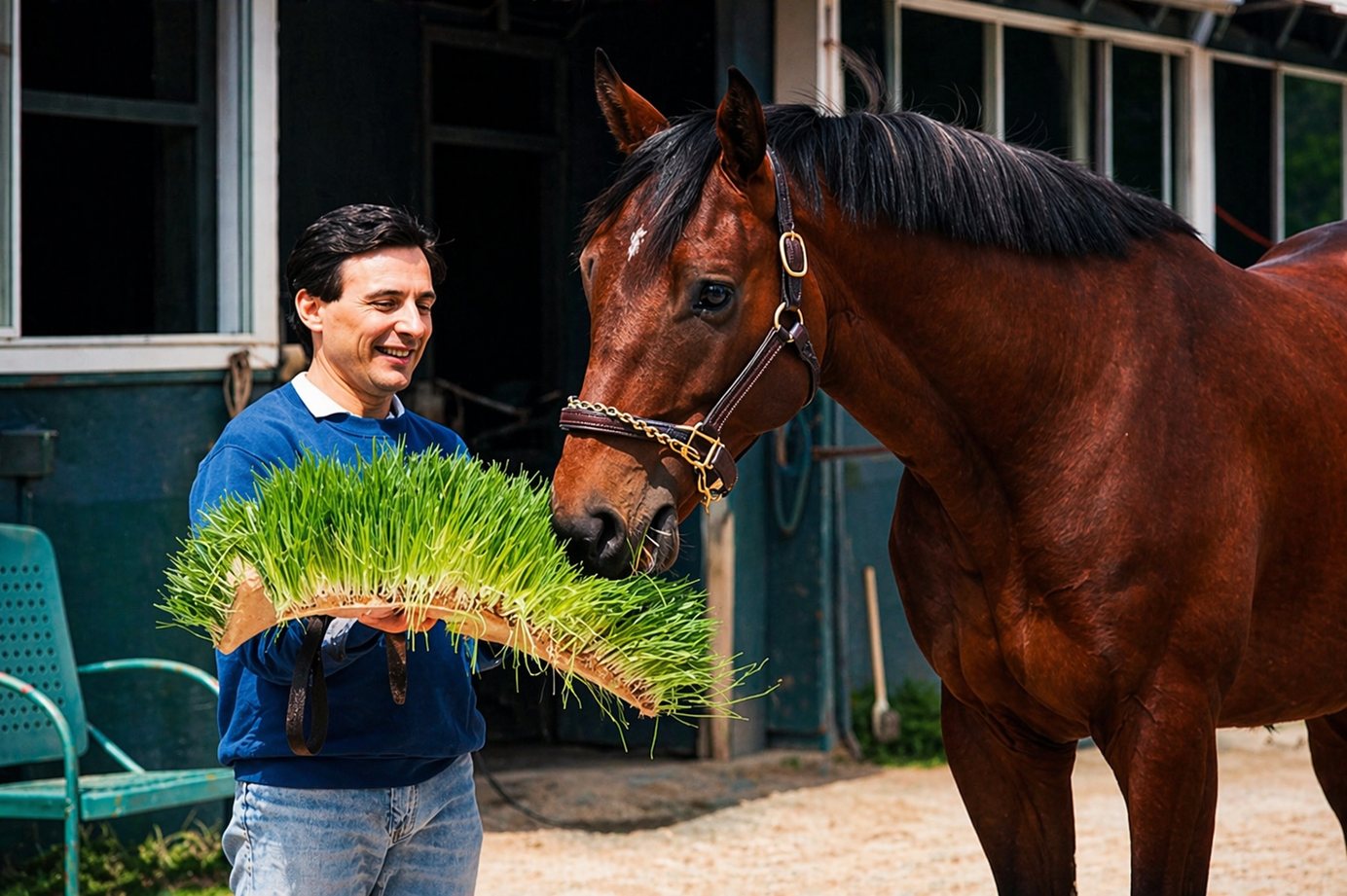
- The barrier is cost clarity, not technology scepticism. The hesitation ranchers describe is rarely about whether hydroponic fodder works. It is about whether the numbers pencil out for their specific operation. This is why we lead with figures rather than claims: production costs of $0.05 to $0.06 per pound of barley sprouts, water use of less than one quarter of a gallon per pound of fodder produced, and installed system costs starting around $70,000 to $75,000 for a containerized unit. Systems approved under the USDA Environmental Quality Incentives Program address the up-front cost barrier directly.
- Trust travels through agronomists and neighbours, not advertising. This finding explains why organic conversation about fodder systems is already surfacing in producer forums, ahead of any formal marketing push, and why a recommendation from a trusted nutritionist or a visit to a working installation tends to move a hesitant rancher further than any brochure.
What separates ranchers who have already adopted from those still waiting
Our whitepaper identifies a recognisable profile among ranchers who have made the leap to fodder systems. They faced a specific, quantifiable cost or supply pressure rather than a general sense that new technology might be useful. They had a clear cost-per-unit comparison against their current feed source. They heard about the technology through a trusted peer, nutritionist, or agronomist. And they had a path to reduce up-front capital exposure, whether through phased installation, retrofit of an existing structure, or grant funding.
None of this requires a rancher to be an early adopter by temperament. It requires accurate numbers, a trusted source, and a moment when the cost of standing still becomes clearer than the cost of change.
For a growing number of operators in the western United States, that moment has already arrived.
The complete Why Ranchers Who Adopted New Feed Technology Made the Leap whitepaper includes the underlying McKinsey data, current hay market and snowpack figures, and a full breakdown of what separates ranchers who have adopted fodder systems from those still evaluating the decision.
For ranchers ready to run the numbers on their own operation, we are available to walk through herd size, ration inclusion rate, and current feed spend directly. Contact us to discuss what a hydroponic fodder system would look like on your ranch.